
Innovation competition in government can be challenging because coming up with new ideas isn’t always easy. This article introduces a major contest happening in 2026 and explores how different countries try new approaches, how to encourage government workers to think creatively, and how tools like AI can support innovation. We’ll also look at building long-lasting systems and how working together can turn great ideas into real results. This guide helps you move from inspiration to action.
Key Takeaways
- Looking at how governments around the world try new ways of working is a good start. This contest is a chance to see what works elsewhere.
- To make government work better, people need to think differently. Leaders should create an environment where trying new things is okay, even if they don’t always succeed.
- AI can be very helpful, but we must use it wisely. It’s important to think about who controls the data and how to keep information private.
- Building systems for the future means making them strong and adaptable. We need to plan and use information to make good choices.
- Working with others, inside and outside government, can bring new ideas and help get things done faster.
What’s Happening with Innovation in Government
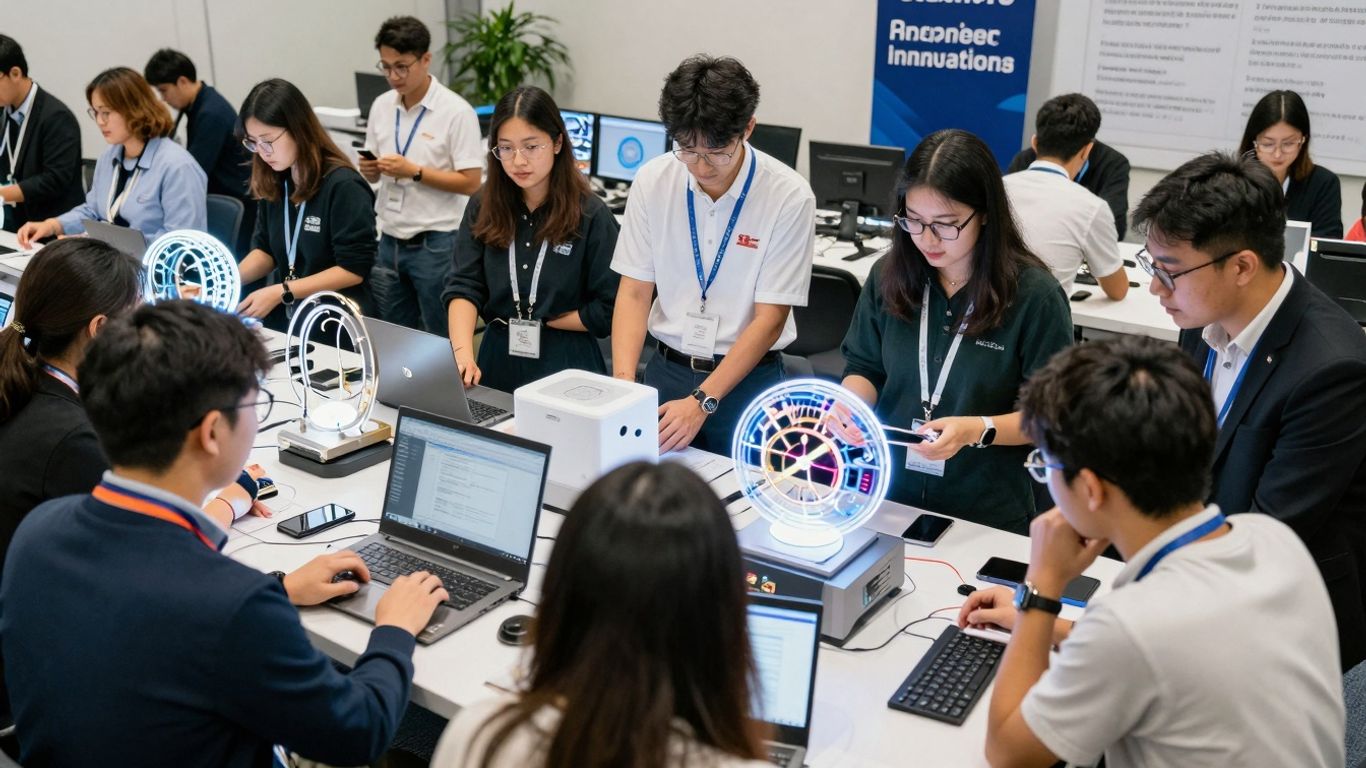
Global Public Sector Innovation Showcase
Thinking about new ideas in government can be tricky. The Global Public Sector Innovation Showcase brings many of these ideas together. It’s a place to see what other countries and departments are trying, what’s working, and what isn’t. This is about seeing how new ideas are used in real public services, not just cool technology. We’ll see examples from managing city traffic to handling citizen data. It shows the direction public services are heading.
Key Themes in Public Service Innovation
Several main topics appear often in innovation efforts. These are the big ideas driving change. They include making services easier for people, making government work more smoothly, and finding ways to solve big problems like climate change. Technology is important, but so is how people work together and make decisions. The goal is to build systems that can last and change.
Here are some common themes:
- Focus on People: Designing services around what people need.
- Efficiency: Doing more with less, and doing it better.
- Sustainability: Creating solutions that last and are good for the environment.
- Resilience: Building systems that can recover from problems.
- Using Data: Using information to guide actions and policies.
How Technology Helps Government Change
Technology is a key tool for changing how government works and interacts with people. It’s not just about making old processes digital; it’s about rethinking them. This could mean using AI to help understand large amounts of information or using digital tools to make services easier to access. The aim is to make the government more responsive and available. The goal is a government that can quickly adapt to new challenges and what people need. Learning how to use new technologies well is vital for this change. This includes looking into agileAI use.
The world of public sector innovation is always changing. What was new yesterday might be common today. To keep up, we need to look beyond our own work and see what’s happening more broadly. It’s about noticing trends early and understanding how they might affect public services.
Creating a Culture of New Ideas in Government
Making government a place where new ideas can grow is important. It’s not just about having smart people, but about creating an environment where they can try new things without too much fear of failing. Government deals with complex issues, so we need people who think creatively and have the support to act on their ideas.
How Leaders Can Encourage Innovation
Leaders play a big role. They need to actively create the right atmosphere. This means setting clear goals, getting approvals, and supporting teams trying new things. It shows that new approaches are encouraged, not just allowed. When leaders support new ideas, it sends a strong message.
- Set a clear direction for innovation.
- Provide resources and remove obstacles.
- Acknowledge successes and learning from mistakes.
Overcoming Challenges to Innovation
Many things can make innovation difficult in government. Rules, old habits, and resistance to change can be hard to overcome. Sometimes, there’s a lack of tools or resources, or it’s hard for different departments to work together. The first step is to identify these challenges, then find practical ways to get past them. This might mean changing how things are done or finding better ways to work together, perhaps using open innovation platforms.
It’s easy to get stuck in routines, especially with daily tasks. But to solve big problems, we need to make time for new thinking and be willing to change how we’ve always done things.
Building a Culture of Trying New Things
This is where things get exciting. A culture of trying new things means that experimenting, even if it doesn’t work perfectly, is seen as valuable. It’s about learning by doing. This could involve small tests, trying new technologies, or finding different ways to communicate with the public. The key is to create safe spaces where government workers can test ideas, get feedback, and improve. This helps build confidence and shows that innovation is a practical way of working.
Here are some ways to encourage trying new things:
- Encourage small tests: Start with small projects to test new ideas.
- Actively collect feedback: Get input from users and others involved.
- Share what is learned: Write down what worked, what didn’t, and why, so everyone can learn.
- Recognize and reward effort: Acknowledge the work of trying new things, no matter the result.
Using Artificial Intelligence for Public Good
Artificial intelligence, or AI, is changing how we do things, and governments are exploring how it can improve public services. It’s not just about speed; AI can help analyze large amounts of information to find patterns or predict needs, leading to better decisions. For example, it could help manage city traffic or predict where resources are needed most during emergencies. The main goal is to use AI to make people’s lives better and government work more effectively.
What’s Needed for AI to Work Well
For AI to work well in government, a strong foundation is needed. This starts with good data. If the data is poor, the AI won’t perform well. It also requires people who understand how to use these tools. We need government workers who can work with AI, not just be replaced by it. Building these skills takes time and training.
- Good Data: Making sure the information the government uses is correct, full, and current.
- Skilled Workers: Training staff to understand, use, and manage AI systems responsibly.
- Clear Goals: Knowing exactly what problems AI should solve and what success looks like.
AI Control and Data Privacy
When governments use AI, they must be careful about who controls the technology and the data. This is sometimes called AI sovereignty. It means having control over AI systems and their data, so private information stays safe, and decisions are made by the right people. Protecting people’s privacy is very important. We need to know how data is collected, used, and stored, and that it’s done ethically. This builds trust.
We must ensure that AI systems used by the government respect people’s privacy and that the data used to train these systems is handled carefully and openly. People need to trust that their information is safe and not being misused.
AI Agents: Helping Teams Work Better
Think of AI agents as smart helpers for government teams. They can do tasks, find information, and help make decisions. For example, an AI agent could help a caseworker by finding case files, summarizing details, and suggesting next steps. This lets the caseworker focus on the human side of their job. This support can make public workers more effective and allow them to focus on more complex, people-focused tasks. It’s about making teams stronger, not replacing people.
Creating Lasting Public Systems

Building public systems that last is a real challenge. Systems need to be strong, work well, and change over time, like living things that adapt to survive. We need to create structures that can handle challenges, not just for now, but for many years.
Building Strong Systems for the Future
Resilience in public systems means they can recover when problems occur, like after a natural disaster or a cyberattack. It means having backup plans and ensuring essential services continue. We need systems that are hard to break and can recover quickly. This involves planning for backups, security, and flexible ways of operating.
- Backups: Having extra systems ready so if one fails, another can take over.
- Security: Protecting systems from digital and physical threats.
- Flexibility: Being able to change services and operations as needed.
- Interoperability: Making sure different systems can work together.
Planning for Long-Term Public Infrastructure
When we build roads, bridges, or digital networks, we must think far ahead. What will people need in 20, 30, or 50 years? This means building things that last and can be updated. Planning for the future means thinking about how technology will change and how our needs will grow. For example, a new transport center must be ready for future travel methods, not just current ones.
Here’s a look at what long-term planning might include:
| Area | Key Considerations |
|---|---|
| Transportation | Electric vehicle charging, self-driving car lanes, more public transit |
| Energy | Electric vehicle charging, self-driving car lanes, and more public transit |
| Digital Networks | Clean energy sources, smart power grids, and energy storage |
| Public Buildings | Energy saving, adaptable spaces, climate readiness |
Why Data is Important in System Design
Data is essential for any modern system. To design systems that last, we need to collect and use data wisely. Data helps us understand how systems are working, where problems might occur, and how to make them better. It’s not just about collecting data, but ensuring it’s accurate, safe, and used ethically. Good data practices lead to better decisions and more effective public services.
Using data well helps us see trends, predict future needs, and fix systems before they become big problems. It’s about being proactive, which saves time, money, and trouble.
Driving Innovation Through Working Together
Sometimes, the best ideas come from people working together from different areas. This is especially true in government, where complex problems need many viewpoints to solve.
Ideas Labs: Places for Internal Innovation
An ideas lab is a special place, physical or online, where government employees can meet to brainstorm and create new solutions. It’s about creating an environment where people feel safe to share ideas and experiment without fear of judgment. These labs can help find good ideas that might otherwise be missed. The goal is to make it easier for good ideas to be found and noticed.
Working Together Across Departments for Impact
Government work can sometimes be divided into separate groups, with departments working alone. But many challenges, like improving services for people or fighting climate change, involve many agencies. When different departments work together, they bring different skills and knowledge. This can lead to better and more effective solutions. It’s about breaking down barriers and helping people see the bigger picture. For example, a project on public health could benefit from input from IT, social services, and city planning.
Partnering with Outside Innovators
The government doesn’t have all the good ideas. Working with outside groups, like universities, new companies, or non-profits, can bring fresh thinking and new technologies to the public sector. This kind of partnership can speed up the creation of new services and help the government keep up with a fast-changing world. It’s about knowing that innovation can come from anywhere and being open to outside views. Building these relationships is key to staying ahead and finding better ways to serve the public. You can learn more about building these connections by looking at new ways to engage the public.
The Future of Government Services
Thinking about how government works for us is important. It’s not just about keeping things running, but about making sure services are easy to use and helpful. How we interact with government is changing and needs to keep up. We are moving towards a future where government services are more connected and simpler for everyone.
Digital IDs for Easier Interaction
Imagine not needing your ID for every government task. Digital IDs could change that. Think of a secure digital wallet on your phone with verified information about you. This means faster access to services, less paperwork, and less frustration. It’s about making sure your identity is known quickly and safely, whether you’re applying for benefits, starting a business, or getting healthcare.
Meeting the Needs of Younger People
Younger people are used to quick, digital experiences in their daily lives. They expect the same from the government. This means services must be available on the devices they use, be easy to understand, and respond quickly. It’s not just about having a website; it’s about designing services that fit their lives. This includes easy online forms, clear communication through their preferred channels, and services available anytime, anywhere.
Improving Services with Digital Tools

This is where real change happens. We’re talking about using technology to rethink how services are provided. Instead of separate, difficult systems, we can build connected platforms. For example, shared services for things like HR and finance across different government departments are already saving money and making things more efficient.
Here are some possible benefits:
- Less repetition of work.
- Faster processing of applications.
- Better data sharing for improved decisions.
- More consistent service quality across agencies.
The goal is to create a government that feels more responsive and works better for everyone, not just those who understand complex systems. It’s about making government work for you in a modern and simple way.
AI is also playing a role. Tools are being tested to help frontline workers with tasks, freeing them up to focus on people. This could mean faster responses in social work or better support for citizens. The key is to use these digital tools carefully, making sure they improve how the government serves the public without losing the human touch.
Seeing the Benefits of Innovation in the UK
Adopting and Spreading New Technologies
Getting new ideas and technology to people across the UK’s public sector is important. It’s not just about having the latest tools, but about making sure they are used and make a difference. It took time for some basic digital tools to become common; we’ve improved, but there’s always more to do. How quickly new technologies are adopted affects how fast we can solve public problems. There’s a lot of interest in AI, quantum computing, and biotech, but the challenge is getting them from the lab into daily use. This involves understanding what helps adoption, what hinders it, and how to encourage more of it.
Buying for Growth and Innovation
Buying things for the government takes time and careful planning. The usual buying methods can sometimes slow down innovation. We need to get better at buying in ways that encourage new ideas and help businesses grow. This means looking beyond just the lowest price and thinking about long-term value and new solutions. It’s about creating a system where innovative companies feel they can work with the government and share their best ideas. This could involve:
- Setting clearer goals for what we want to achieve with new purchases.
- Being more flexible in contracts to allow for changes as new ideas develop.
- Working with suppliers to create solutions, not just buying ready-made products.
Unlocking Potential Through Policy
Sometimes, rules and regulations can unintentionally slow down innovation. Policies are important, but we need to ensure they don’t block progress. Smart policy can help new ideas grow. For example, policies that support data sharing (while protecting privacy) can speed up research. Also, policies that make it easier for different government departments to work together on new projects can lead to bigger successes. We need to review our policies to see where they might create unnecessary problems and how we can change them to better support innovation in the UK.
Learn how to truly benefit from new ideas in the UK. We help businesses grow by making innovation simple and effective. Ready to see your company grow? Visit our website today!
Conclusion
This is a look at what’s happening with innovation competitions in 2025. There are many chances for people with good ideas, especially in public service. Whether you’re thinking about AI, making government work better, or creating something totally new, there’s a place for you. Don’t let your ideas just sit there. Look into these events, find what fits, and get ready to share your ideas. You never know where it might lead.
Frequently Asked Questions
What is this big innovation contest about?
This is a major event in 2025 where government workers from around the world share new ideas to improve public services and solve tough problems.
What kind of new ideas will be shown?
You’ll see ideas about using technology to help people, like making government services easier to use online. There will also be talks on how to make government work better, be more creative, and how to work with others to find solutions.
How can technology, like AI, help the government?
Artificial Intelligence, or AI, can help governments in many ways. It can help with difficult tasks, make services faster, and help teams work smarter. The event will discuss how to use AI safely and correctly to help everyone.
Why is it important for government workers to be creative?
Governments need new solutions for problems like climate change or helping more people. Being creative helps them find better ways to do their jobs and serve the public. This event shows how to create a culture where new ideas are welcomed.
How do different government groups work together on new ideas?
Sometimes, the best ideas come when different parts of the government, or outside groups, team up. This event explores how these collaborations, like special ‘ideas labs,’ help bring new thinking and get things done better.
What’s the main goal of this competition?
The main goal is to inspire and help government workers find and use innovative solutions. It’s about making public services work better for everyone, now and in the future, by sharing knowledge and encouraging new ways of thinking and doing.