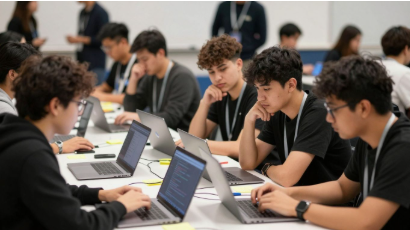
So, you’re looking to get your team thinking outside the box and maybe even build some cool stuff fast? Hackathons might be the answer. They’re not just for tech startups anymore; companies are using these events to get ahead. It’s all about getting people to work together, learn new things, and come up with fresh ideas quickly. Think of it as a shortcut to innovation, where learning happens by doing. We’ll look at how competitive learning through hackathons can really make a difference for your company.
Key Takeaways
- Hackathons speed up new ideas by creating working models that can get to market faster.
- Employees can learn new tech, like AI, and develop a problem-solving attitude through these events.
- Hosting hackathons shows everyone, inside and out, that the company is serious about new ideas.
- These events help teams work better together and break down walls between departments.
- Competitive learning through hackathons builds a strong company image and attracts good people.
Accelerating Innovation Through Hackathons
In today’s fast-moving world, staying ahead means constantly coming up with new ideas and making them real, fast. Hackathons are a fantastic way to do just that. They’re not just about coding marathons; they’re intense, focused events where teams get together to tackle specific business problems and build working prototypes. Think of it as a pressure cooker for creativity. This process can dramatically speed up how quickly new products and features get from a simple idea to something you can actually show people, and sometimes, even sell.
Fast-Tracking New Innovations with Prototypes
One of the biggest wins from a hackathon is the creation of high-fidelity prototypes. Instead of spending months in lengthy development cycles, teams can build functional models in a matter of days. This allows companies to test ideas quickly and get them into the hands of users for feedback much sooner. It’s about getting to a point where something works, even if it’s not perfect yet. This rapid prototyping is key to staying competitive.
From Concept to Market-Ready Solutions
Hackathons can be the starting point for solutions that eventually become core parts of a company’s offerings. Take Facebook, for example. Many features we use daily, like Facebook Chat (which evolved into Messenger) and Groups, were born from hackathon projects. The goal isn’t always a finished product at the end of the event, but rather a solid foundation that can be built upon. This approach helps bridge the gap between a raw concept and a viable market solution, often with follow-up programs to keep the momentum going.
Learning from Industry Leaders Like Facebook
Looking at how successful companies use hackathons can be really insightful. Companies like Facebook have a history of using these events to drive innovation. They show that by focusing on building working prototypes, even if they need more refinement later, you can create impactful features. This practical, hands-on approach to problem-solving is something many organizations are adopting to speed up their own innovation cycles and learn from the best in the business. It’s a smart way to see how real-world innovation happens.
Upskilling Employees for Future Technologies
In today’s rapidly changing tech world, keeping your team’s skills sharp is a constant challenge. Hackathons provide a fantastic way to get employees up to speed on new tools and concepts, like Generative AI. Instead of just reading about new tech, people actually get to build with it. This hands-on approach is way more effective for learning.
Mastering New Technologies Like Generative AI
Think about it: how many times have you seen a new technology pop up, and everyone’s scrambling to figure it out? Hackathons are perfect for this. They create a focused environment where teams can dive deep into a specific area. For example, a hackathon centered around Generative AI can push employees to explore its capabilities, from creating text to generating images. It’s about getting your hands dirty and seeing what’s possible.
The Power of Pre-Hackathon Learning Curricula
Just throwing people into a hackathon without any prep isn’t always the best idea. That’s why many successful hackathons include learning sessions beforehand. These aren’t just quick overviews; they can be multi-week programs designed to give participants a solid foundation. For instance, requiring teams to complete a course on Google Cloud’s AI skills before the event starts means everyone comes prepared to innovate. This structured learning ensures that participants can hit the ground running and contribute meaningfully from the start.
Translating Theory into Practical Proofs of Concept
The real magic happens when theory meets practice. Hackathons are designed to be fast-paced and goal-oriented. This pressure cooker environment forces participants to take what they’ve learned and quickly turn it into something tangible – a proof of concept. It’s not about building a perfect, market-ready product in a weekend, but about demonstrating a working idea. This process is incredibly effective for solidifying knowledge and showing the real-world application of new technologies. It’s a great way to see potential business applications emerge from raw ideas.
The competitive and time-bound nature of hackathons creates an environment that is not only engaging but also highly conducive to accelerated learning. This setting encourages employees to translate theoretical knowledge into practical proof of concepts (POCs) with real business potential.
Cultivating a Founder’s Mindset

Hackathons do more than just churn out prototypes; they actively shape how your employees think and operate. They help build what we call a “founder’s mindset.” This isn’t about everyone suddenly starting their own company, but about adopting a certain way of approaching problems and opportunities. It’s about seeing potential where others might see roadblocks and being ready to pivot when things change.
Spotting Opportunities and Adapting Swiftly
Competitive learning through a hackathon puts your team in fast-paced, real problem-solving situations. With limited time and resources, you’re pushed to think beyond obvious solutions and spot gaps or inefficiencies others miss. This builds a proactive mindset; your team doesn’t wait for direction; they look ahead. As technology keeps changing, this approach helps you adapt quickly, stay confident with change, and use tools like Wagmi and Web3Modal to simplify complex tasks and move forward faster.
Relentless Focus on Execution
Ideas are great, but they don’t mean much without action. Hackathons are all about building something tangible. You can’t just talk about a solution; you have to make it work, even if it’s just a basic version. This intense focus on execution is what separates a good idea from a real product. It teaches discipline and the importance of getting things done, even when you’re tired or facing unexpected issues. You learn to prioritize what truly matters and push through the tough spots to reach a working outcome.
Engaging Employees for Meaningful Connections
When people work together intensely on a shared goal, like in a hackathon, they build strong bonds. It’s not just about the code or the design; it’s about the shared experience. This collaboration breaks down usual workplace barriers and helps employees connect on a deeper level. They learn to trust each other’s skills and rely on one another. This kind of engagement is what makes people feel invested in their work and the company. It turns a job into something more, fostering a sense of belonging and shared purpose.
Hackathons create an environment where employees are encouraged to take initiative, experiment, and learn from both successes and failures. This hands-on approach cultivates resilience and a proactive attitude, traits that are vital for any individual aiming to make a significant impact within an organization.
Fostering an Innovation Culture

Building a lasting culture of innovation isn’t just about having a few good ideas; it’s about creating an environment where new ideas can actually grow and take root. Regular hackathons are a fantastic way to do this. Think about companies like Google or Microsoft – they use these events to get people thinking differently. When you put people from different departments together for a hackathon, they naturally start working more closely and break down those walls that often get in the way of progress.
Encouraging Teamwork and Collaboration
Hackathons are built around teamwork. You’re not just working on your own project; you’re part of a small group trying to solve a problem. This forces people to share ideas, listen to each other, and figure out the best way forward together. It’s a hands-on way to learn how to collaborate effectively, which is something that can be hard to teach in a regular meeting.
Breaking Down Organizational Silos
Sometimes, different teams in a company don’t talk to each other much. Marketing might not know what engineering is working on, and vice versa. Hackathons bring these different groups together. Someone from sales might have a great idea that an engineer can build, or a designer might help a marketing person visualize a new concept. This cross-pollination of ideas is where real innovation often happens. It helps everyone see the bigger picture and understand how their work fits in.
Building a Long-Lasting Culture of Innovation
Competitive learning through a hackathon works best when it’s done regularly, not just once. Making hackathons a consistent part of company culture shows employees that new ideas matter. It creates a safe space to experiment, boosts engagement, and encourages people to stay and contribute. Over time, this mindset improves teamwork, helps teams adapt faster, and shows both employees and future talent that innovation is a real priority.
A company that regularly holds hackathons shows its employees that their creative input is valued. This isn’t just about a single event; it’s about embedding a continuous process of ideation and problem-solving into the company’s DNA. When people feel heard and see their ideas have a chance to be developed, their motivation and commitment naturally increase.
Enhancing Company Brand and Market Position
Think of hackathons as more than just internal events; they’re a really effective way to show the world what your company is made of. When you host one, it’s like sending out a public signal that you’re all about new ideas and moving fast. This can grab the attention of people you want to work with, like potential partners or investors, who are looking for companies that are forward-thinking. It’s a way to position yourself as a leader in your field, not just by saying it, but by showing it through action.
Positioning as an Industry Innovation Leader
Putting on a hackathon is a clear statement. It tells everyone, both inside and outside your company, that you’re serious about innovation. This kind of event can really make your company stand out. It’s not just about the cool projects that come out of it, but the message it sends about your company’s culture and its commitment to progress. This can make a big difference in how people see your business.
Attracting Talent and Strategic Partnerships
Companies that actively engage in innovation through events like hackathons tend to be more attractive to top talent. People want to work where new ideas are welcomed and explored. It also opens doors for collaborations. When other businesses see you’re a hub for creativity and problem-solving, they might be more inclined to partner with you on future projects. It’s a win-win: you get great people and potentially great collaborators, and they get to be part of something exciting. This is a key part of building a strong company brand.
Elevating External Perceptions and Internal Culture
Hackathons do double duty. Externally, they build your reputation as a place that’s pushing boundaries. Internally, they send a powerful message to your own team: their ideas matter, and the company is willing to invest in exploring them. This can boost morale and make employees feel more connected to the company’s goals. It’s a way to show that you value creativity and are willing to put resources behind it, which can lead to a more engaged and productive workforce.
Here’s how hackathons contribute:
- Public Demonstration: Showcases a commitment to innovation and agility.
- Talent Magnet: Attracts individuals who thrive in creative and dynamic environments.
- Partnership Catalyst: Opens doors for collaborations with like-minded organizations.
- Internal Validation: Reinforces to employees that their ideas are valued and explored.
Hosting hackathons can significantly shift how your company is perceived, both by the outside world and by the people who work there every day. It’s a tangible way to build a reputation for being innovative and a great place to work.
The Strategic Value of Competitive Learning
Think of hackathons not just as fun events, but as serious business tools. They’re a smart way to get ahead and stay there. These events are a strategic asset, plain and simple. They help your company move faster, learn quicker, and build a stronger team, all while looking good to the outside world.
Hackathons as a Strategic Asset
Hackathons are more than just a day or two of coding and pizza. They’re a deliberate move to boost innovation and employee growth. Companies are starting to see them as a key part of their plan, not just an optional extra. It’s about getting real results, like new product ideas or ways to fix problems, developed quickly. This approach helps organizations stay agile in a market that changes constantly. It’s a way to test new ideas without huge risks, turning concepts into something tangible that can actually be used. This is why many businesses are looking at hackathons as a strategic tool for growth.
Driving Productivity and Employee Engagement
When people get excited about a project, they work harder. Hackathons tap into that energy. They give employees a chance to work on something they’re passionate about, often outside their usual day-to-day tasks. This can lead to a big jump in how much people get done and how much they enjoy their jobs. It’s a way to break up the routine and give folks a fresh challenge. Plus, seeing their ideas come to life can be incredibly motivating.
Here’s what happens:
- New Ideas Emerge: Employees bring fresh perspectives to tough problems.
- Skills Get Sharpened: People learn new tech and how to use it fast.
- Teamwork Improves: Different departments start talking and working together.
- Morale Boosts: A sense of accomplishment and fun makes work better.
Investing in a Future-Ready Organization
Running hackathons is like planting seeds for the future. You’re not just solving today’s problems; you’re building the skills and the mindset your company will need tomorrow. It’s about getting your team ready for whatever comes next, especially with new technologies popping up all the time. This proactive approach means your company is less likely to be caught off guard and more likely to lead the way. It’s a smart investment in making sure your business can keep up and thrive for years to come.
Learning from others is a smart way to get better. When businesses watch what their rivals are doing, they can find new ideas and improve their own plans. This helps them stay ahead and make smarter choices. Want to learn more about how this can help your business grow? Visit our website today!
Wrapping Up: Hackathons as Your Innovation Engine

So, we’ve talked about how hackathons are more than just a quick way to build cool stuff. They really help people learn new skills fast, especially with new tech like AI. Plus, they get everyone thinking like they own the place, which is great for coming up with new ideas. And it’s not just about what happens inside the company; hosting these events shows everyone else that you’re serious about innovation. It’s a smart move for any business wanting to stay ahead and keep good people around. Think of it as a solid investment in your company’s future.
Frequently Asked Questions
What exactly is a hackathon?
Think of a hackathon as a special event where people get together, usually in teams, to work on a project really fast. They often focus on technology or solving a specific problem. It’s like a marathon for creating new ideas and making them work, all within a short amount of time.
How do hackathons help companies create new things quickly?
Hackathons are great for making new ideas happen fast! Teams build working models, called prototypes, of their ideas. This helps show if an idea is good and can be turned into something people can actually use, sometimes even faster than normal.
Can hackathons teach employees new tech skills?
Absolutely! Hackathons are a fantastic way for employees to learn about new technologies, like AI, that are becoming important. Often, there are learning sessions before the hackathon, so everyone gets a chance to understand the basics before they start building.
What’s a ‘founder’s mindset’ and how do hackathons help with it?
A ‘founder’s mindset’ means thinking like someone who starts a company. It’s about seeing chances to improve things, being ready to change plans when needed, and really focusing on getting things done. Hackathons encourage this by letting employees take charge of their projects and solve problems creatively.
How do hackathons make teams work better together?
Hackathons bring people from different parts of a company together. This means they have to talk, share ideas, and help each other out. It helps break down walls between departments and builds stronger teamwork, which is super important for any company.
Why should a company bother with hackathons?
Companies use hackathons to invent new things faster, help their employees learn new skills, and build a culture where new ideas are encouraged. It also makes the company look good to others as a place that’s innovative and attracts talented people.